

Staying active over the years is one of the best ways to preserve health, energy, and mobility. Yet when joints become painful or osteoarthritis sets in, it can be tempting to cut back on physical activity. However, movement remains essential, even, and especially, when living with osteoarthritis. The key lies in adaptation.
This article offers practical advice and scientific insights to help you stay active safely, effectively, and enjoyably, regardless of your age or the condition of your joints.

Regular movement helps maintain flexibility, muscle strength, and joint stability. According to the World Health Organization (WHO), physical inactivity is one of the leading risk factors for chronic diseases and premature aging.
For people living with osteoarthritis, numerous studies show that physical exercise helps reduce pain and improve quality of life. In other words, movement does not damage the joints—on the contrary, it helps protect them. Exercise stimulates the natural production of synovial fluid, which acts as a lubricant for the joints, while also strengthening the muscles that support them.
While physical activity is beneficial, it must be adapted to each person’s pain level and condition. High-impact sports, such as running on hard surfaces or repetitive jumping, can worsen symptoms. Conversely, low-impact activities are the joints’ best allies. Here are a few examples:
Brisk walking
An excellent way to maintain mobility without excessive stress on the knees or hips.
Swimming and water aerobics
Water reduces body weight, allowing for gentle movement while strengthening muscles.
Stationary cycling
Improves circulation and knee flexion without impact.
Yoga or tai chi
Promote flexibility, balance, and proprioception (body awareness in space).
A study published in Arthritis Research & Therapy showed that people with knee osteoarthritis who engaged in moderate physical activity at least three times a week had better physical function and a higher quality of life after four years of follow-up.
Certain precautions can help you fully enjoy the benefits of movement while reducing the risk of worsening joint pain:
Start slowly
If you’re returning to physical activity, begin with short sessions and gradually increase duration and intensity. The goal is consistency, not performance.
Choose the right time of day
Many people with osteoarthritis feel stiffer in the morning. Opt for times when your joints are more “warmed up,” often in the afternoon.
Use proper equipment
Well-fitted shoes or a thick yoga mat can reduce impact and improve comfort.
Listen to your body
Mild discomfort during exercise is normal, but persistent pain lasting more than 48 hours is a signal to slow down or adjust your activities.
Focus on regularity
It’s better to exercise for 20 minutes every day than to push through one long, exhausting session once a week.
Seek professional guidance
A kinesiologist or physiotherapist can help design an exercise program tailored to your condition.
Movement should remain a source of pleasure, not a burden. To stay motivated, choose activities you genuinely enjoy, vary your exercises to avoid monotony, and, when possible, join walking groups or clubs, social support encourages consistency. Don’t forget to celebrate small daily wins, whether it’s improved flexibility, less stiffness, or renewed energy.
The benefits of movement extend far beyond joint health. Regular exercise reduces the risk of cardiovascular disease, improves weight management, boosts mood, and strengthens functional independence.
According to Arthritis Research Canada, more than 50% of adults with osteoarthritis do not meet the minimum physical activity recommendations. Yet movement remains the best natural strategy to slow symptom progression and preserve quality of life.
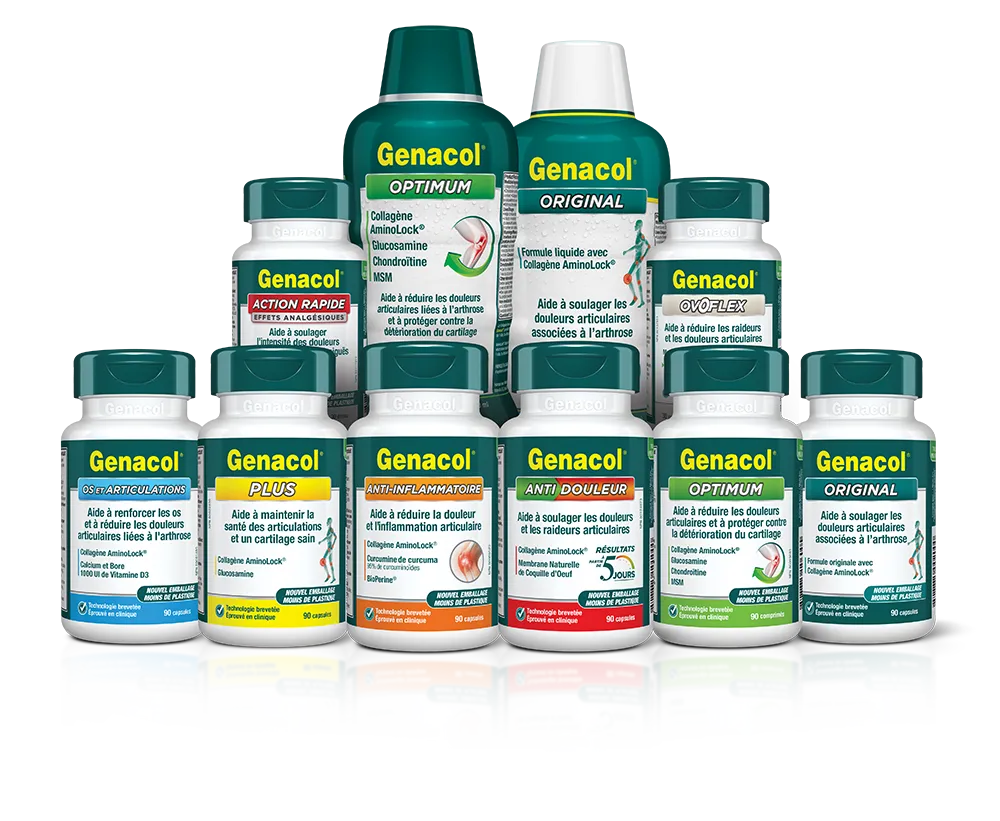
Adopting an active lifestyle is essential, but joints may also need extra support to function at their best. This is where supplements like Genacol, formulated with AminoLock hydrolyzed collagen, can help support joint health and daily mobility.
Combined with regular physical activity and healthy lifestyle habits, they help you stay active longer, and, most importantly, more comfortably.


Please wait while you are redirected to the right page...